
Part 2
The How:
A Blueprint for the Operating Model
The Job Map: A Systems View of the Enterprise
What Jobs to Be Done ultimately produces is structural, the first layer of the Intelligent Experience Architecture™: a single, shared picture of how the business runs end to end, and where value is created along the customer lifecycle. That picture is what we call a job map. A single job is one outcome someone is trying to get done. Connect them in the order the work happens, and they form the map: a connected set of jobs, such as marketing, sales, product onboarding, and customer service jobs, that together serve customers across their lifecycle. Seen this way, the map is a systems view of the business, where the customer experience emerges from how the jobs connect rather than from any one function working well in isolation. We help build that map in a facilitated workshop, with cross-functional leaders from across the organization in the room. And because they build it together, many see for the first time how their collective work connects across the business. The result is a leadership team aligned on where the business creates value, and clear on where digital and AI investment should go.
Anatomy of a Job: How Jobs Build the Job Map
A job is inherently technology and solution agnostic, and the way you structure one is what maintains that. The discipline of describing and writing a job well is deceptively important: start with a verb, 4-5 words, and reflect an end state. "Book a flight" is a job with a clear outcome; "use the booking portal" is a solution. The distinction matters because solutions or technology change constantly, while jobs are behavioral and endure. So, an enterprise strategy built on jobs can remain stable even as the technology beneath it changes.
As you identify and connect multiple jobs, they begin to form a hierarchy, from aspirational jobs down to functional Big, Little, and Micro Jobs. That hierarchy is what gives the framework its depth and precision. A person whose aspirational job is to “connect with family” has a Big Job, to “enjoy a family vacation”, beneath which sit Little Jobs such as “plan the trip”, and Micro Jobs such as “book a flight”. Read upward from smaller jobs to bigger jobs and the map answers why the job matters; read downward and it answers how a bigger job breaks into smaller ones.
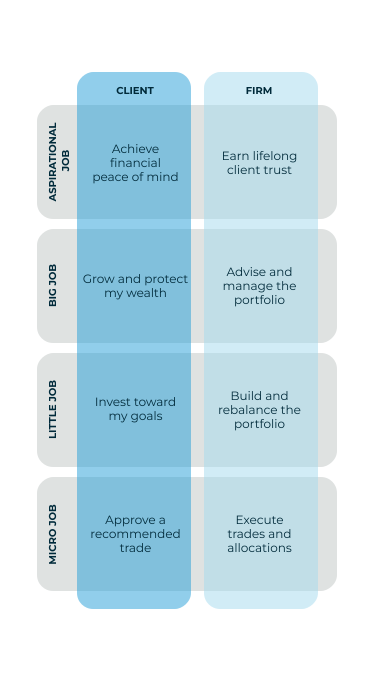
Figure 1. An example Jobs to Be Done hierarchy for Financial Services, from the aspirational job down to the concrete.
Connecting jobs laterally gives the structure breadth. “Plan the trip,” “make the reservations,” and “arrive at the hotel,” for example, are connected Little Jobs that, completed in sequence, deliver the Big Job of enjoying a family vacation.
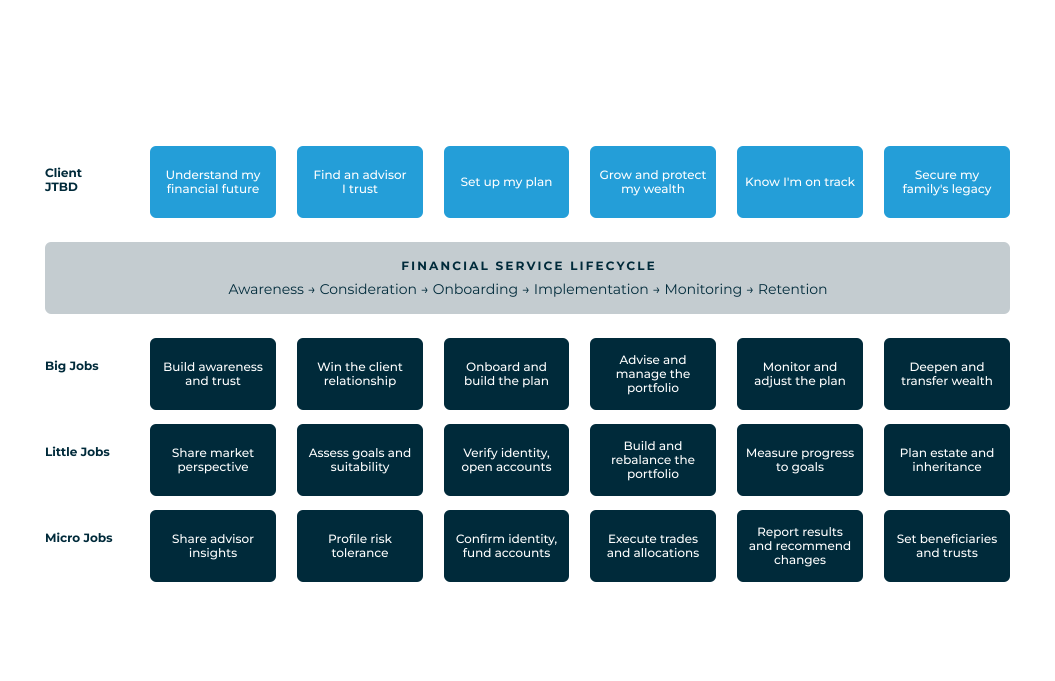
Mapped across an enterprise, those two dimensions scale together: Big Jobs span the business functions across the customer lifecycle, and the Little and Micro Jobs beneath them break that work down into smaller units. The breadth and depth define the structure of a job map, giving executives, leaders, and teams a single view of the total work the enterprise must perform to deliver customer outcomes.
Figure 2. A job map, aligned to the customer lifecycle.
Inside the Enterprise: Jobs, Performers, and Agents
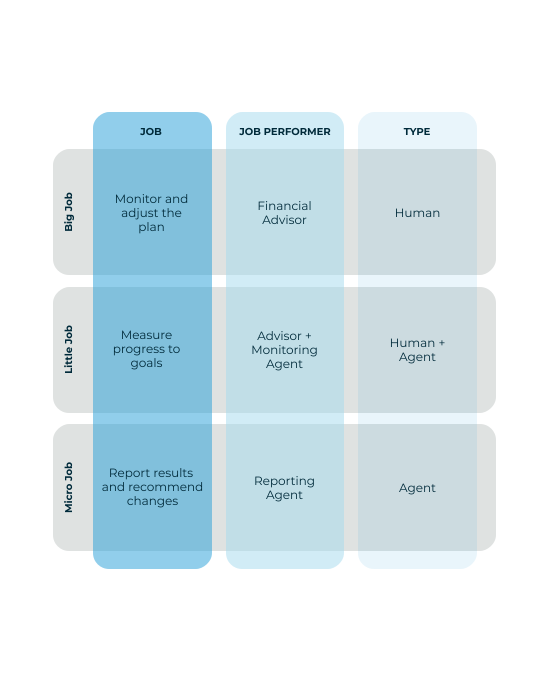
Historically, most organizations have used Jobs to Be Done as a human-centered framework for studying customers to design a product or service. Our adaptation maintains the human-centered value but turns the lens inward to understand the work a business needs to support customers. Behind every customer outcome sits a chain of internal jobs the enterprise must perform to deliver it, each with an owner: a frontline employee, a specialist, an operations team, and, increasingly, AI agents. We call these job performers: the humans or AI agents ultimately responsible for a job's outcome. Seeing jobs and their performers together gives leaders a shared, systems-level view of how the work must be orchestrated.
Mapped this way, the jobs run across the full customer lifecycle and through the front, middle, and back office. The job map brings the whole system into view, revealing the most consequential AI and agentic opportunities to identify and prioritize.
Figure 3. Job performers as humans and agents representing human and digital workforce.
Jobs to Be Done Extend into Agentic Product Design
Because a job is written as an outcome rather than a feature, it already speaks the language an agent needs: a goal to pursue and a result to deliver. The job hierarchy then maps directly onto how an agent is configured, its topics and scope, its guardrails and filters, the instructions it follows, and the actions it is accountable for. And because each job points to the type of AI it requires, generative, predictive, assistive, or autonomous, the job map becomes the bridge from strategy to the AI or agentic systems that execute it. Surfacing that full picture, the jobs, their performers, and agentic opportunities, is the outcome of the Jobs to Be Done workshop that follows.
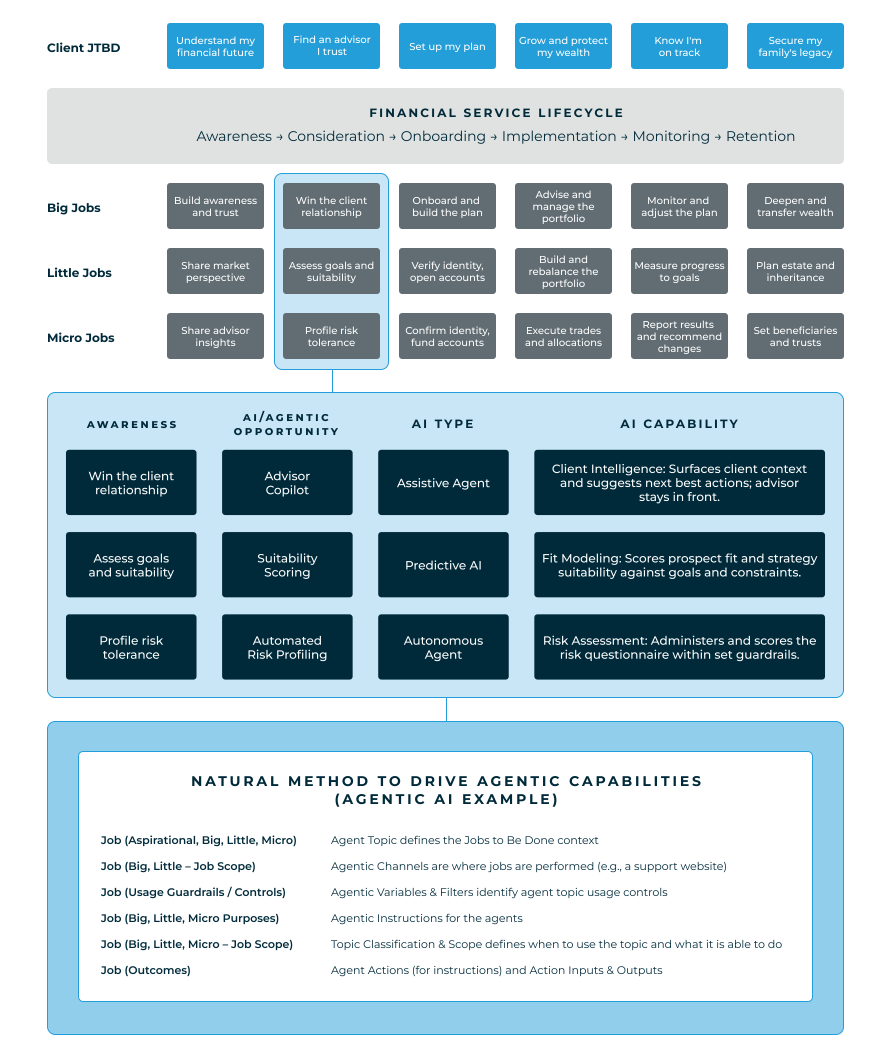
Figure 4. How Jobs to Be Done provide the context for agentic capability design, mapping each job to the precise point in the flow of work where an agent should act, what it should do, and why. Credit: Mario Ruiz and Paul Bertucci.
Jobs to Be Done Workshop as a Leadership Forum
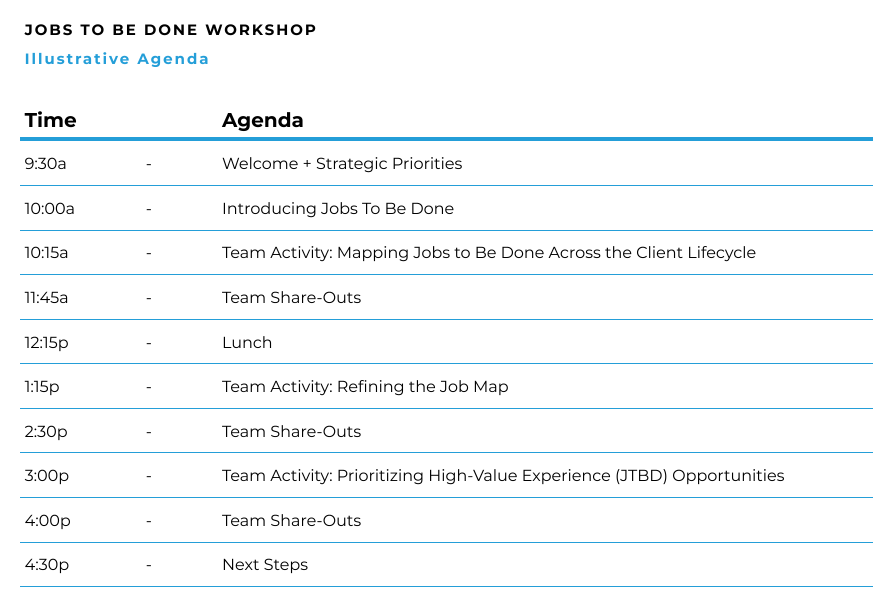
In our methodology, the job map is built by the leaders themselves, in a single-day facilitated workshop, with the executive sponsor and cross-functional senior leaders from business, technology, and operations in the same room. The starting point is anchoring the Big Jobs across the customer lifecycle. From there, we organize and facilitate smaller cross-functional teams to build out the breadth and depth of the underlying jobs.
The session is framed by the organization's own strategic priorities and runs as hands-on, collaborative work, because the creative act of building the map together is what produces its value. Once the map is collaboratively built, teams connect those priorities to the high-value jobs that will deliver them. Cross-functional trade-offs that normally surface late, causing delays and rework, are resolved in the room. Ownership follows from direct authorship. Decisions that ordinarily take months are reached within a day since the leadership group has context. Before further investments are determined, the organization has alignment, a shared picture, consistent language, and a leadership team with increased decision velocity.

Figure 5. Anchoring the Big Jobs across the customer lifecycle as a starting point for the Jobs to Be Done workshop.
“By bringing cross-functional leaders together around the customer journey, the workshop helped us move beyond individual initiatives and align on the jobs that drive growth, retention, and loyalty. The resulting map became a foundational framework for prioritizing improvements, evaluating technology investments, and shaping future customer experience enhancements.”
Figure 6. Draft agenda for a Jobs to Be Done workshop.
Faster Decisions, Deeper Engagement, Critical Thinking
The collaborative format of the workshop engages what Daniel Kahneman would call ‘System 2’ thinking.6 ‘System 1’ is fast and automatic, while System 2 involves deeper cognitive processing, creative ideation, and semantic memory. Building the job map is a rapid, collaborative process of reconciling everyone’s partial view into one shared mental model of the enterprise. As a group experience, this is formative. This deeper, more difficult examination of fundamental assumptions is what creates the foundation for enterprise agency, the ability of an organization to move as a whole, quickly and with strong purpose.
This is the type of thinking organizations need in what former CEO of Cognizant, Frank D’Souza, calls the new ‘first-mile problems’. In a more abundant AI world, “machines can build the house, but they don’t know what its future residents will want and need.”3
Jobs to Be Done as a Foundation for Enterprise AI Strategy
Activating the job map becomes the basis for the strategic decisions leaders must define. Where do we deploy AI? How do we orchestrate multiple agents and teams working together? What is the underlying data needed across jobs? Tracing each answer back to a specific job and its capabilities is what shows how a sprawl of disconnected pilots resolves into a single, traceable investment, how a CEO can show the board that capital is flowing to the investments that pay off, and how a revenue leader can connect a better customer experience to pipeline and retention. It is also what makes the enterprise ready for digital and AI investment.
As agents begin to act as the users of enterprise systems alongside people,7 a clear, codified map of the work is what gives an organization the confidence and the guardrails to invest. A job map, in the end, is how an organization positions itself toward an agentic future: by knowing, in shared and structured terms, exactly what work it does, who is best to do it, why, and how to adapt it as things change.