
Part 3
The Outcomes:
A Through Line to Business Outcomes
From a Job Map to Measurable Value
A job map is the foundation on which the rest of the strategy and enterprise architecture work stands, and once the jobs are visible, the path to value is both precise and traceable.
Each job points to the corresponding capabilities required to deliver it, across business, data, and AI. From there the sequence is well defined: assess where those capabilities are strong and where they fall short, rank the opportunities by value, shape the future-state architecture, and lay out a phased roadmap with a business case behind each initiative. Each of these steps is a discipline on its own, but what matters here is the through line. Every step traces back to a job, and every job to an outcome the business owns. That traceability is what turns a roadmap into a P&L conversation, and what lets leadership communicate the same value story to the board and customers without changing the narrative.
The same map answers the questions facing leaders today regarding AI: which work remains human, which moves to agents, and how does collaboration happen reliably across connected business domains. The job performer was always a role, and that role can now be a person, an agent, or a team of both where the AI assists.3 Mapping the jobs to be done lets an organization design that balance proactively rather than discover it in hindsight. As agents assume more of the load, the enterprises that planned the mix will scale with composure; those that did not will have to address disconnected experiences that ultimately impact the customer experience.
This is how digital and AI investment shifts from incremental to cumulative returns. Each initiative in a roadmap delivers value, and because it is anchored to a job and an outcome, the next one begins on firm architecture. The result is a durable, adaptive, AI-ready enterprise, one in which business value, customer experience strategy, architecture, and engineering work tightly in concert.
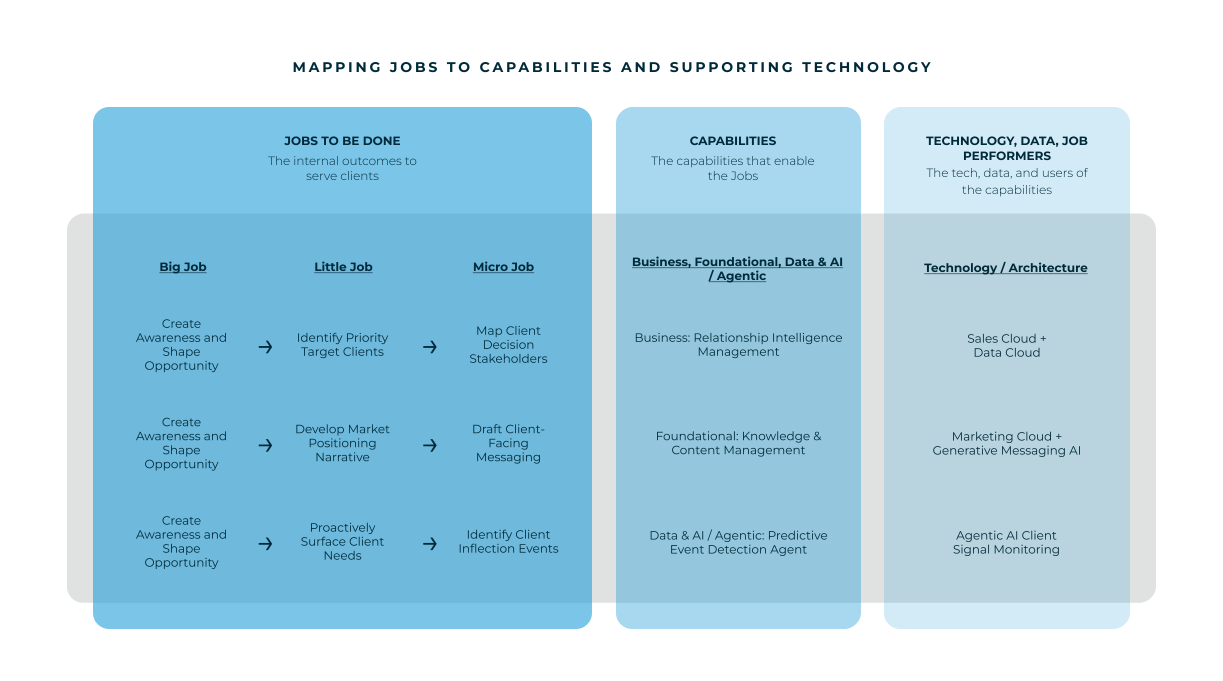
Figure 7. From jobs to capabilities to business outcomes. Credit: Mario Ruiz and Paul Bertucci.
Case Study
GoHealth Urgent Care
GoHealth Urgent Care partners with nationally recognized health systems to provide urgent care services across the US. A key initiative is to grow customer value and to ensure more customers and their families keep coming back. With a fragmented set of systems, and many customer touchpoints, GoHealth's goal is to reduce friction across the customer journey and make it easier for customers to engage with their JV brands.
In a single day, a Jobs to Be Done workshop sponsored by Chief Experience Officer Paula Blomquist brought GoHealth's cross-functional leaders together to map the jobs across the full customer lifecycle, from how a customer first finds care through the visit and the follow-up that brings them back, and set the agenda for an enterprise-wide assessment of the capabilities and technology behind them.
Building the map together gave the leadership team its first shared view of how the business creates value across that lifecycle. They prioritized the jobs that move the outcomes they are measured on: recognizing returning customers to strengthen retention, recovering lost and missed visits to protect revenue, and connecting follow-up care to earn repeat visits and referrals. Tracing those jobs to the capabilities behind them showed where technology was duplicated and where it was missing and gave leadership a clear basis for streamlining the stack and focusing investment where it drives growth. The organization came away aligned on where growth and retention come from, with a leaner, lower-cost technology base and a clear roadmap to a digital-first, AI-ready operating model.