Intelligent Jobs and Outcomes:
Leveraging JTBD as the Experience Architecture for AI and Agentic Innovation and Value
What makes JTBD particularly powerful as a framework for AI and agentic innovation is its built-in hierarchy. JTBD organizes jobs from aspirational jobs down to Big, Little, and Micro jobs to be done, each level getting more granular. Figure B shows this hierarchy with examples across industries and how they ladder up to each other. The higher levels address the organization’s vision; the lower levels address tactics. In our framework, we focus primarily on functional jobs to be done, though the approach can expand to include social and emotional jobs for deeper understanding.
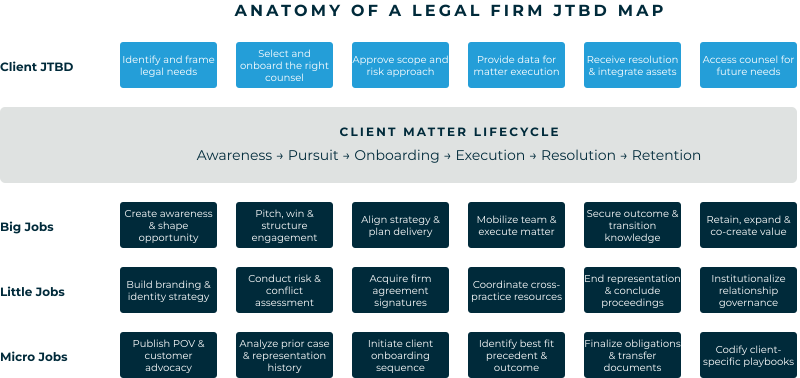
This hierarchy is what makes JTBD usable in both strategic planning and tactical implementation. Figure C shows how smaller, more granular jobs fit into the bigger jobs across customer lifecycle stages, creating both a broad and deep view of organizational jobs to be done. Because they are behavioral, the jobs evolve, but don’t change rapidly, so they provide a stable view that supports long-term strategy while also addressing immediate action.
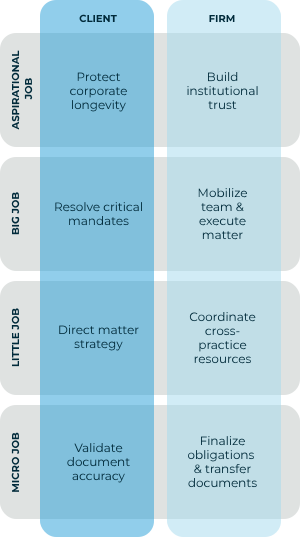
Figure B
Sample JTBD hierarchy, Legal.
Figure C
The expanded JTBD map shows the hierarchy of Big, Little, and Micro legal firm jobs to be done to support the client matter lifecycle.
Critically, Jobs to Be Done are intentionally solution- and technology-agnostic. The jobs create a framework for generating solutions with existing and emerging digital technologies, including AI and agentic capabilities. The JTBD map can help prioritize key customer touchpoints and provide the context for potential AI-oriented solutions that can be further conceptualized. With a recent client, we executed three two-week sprints to ideate, design, prototype, and align stakeholders on AI-enabled experiences to improve the customer experience.
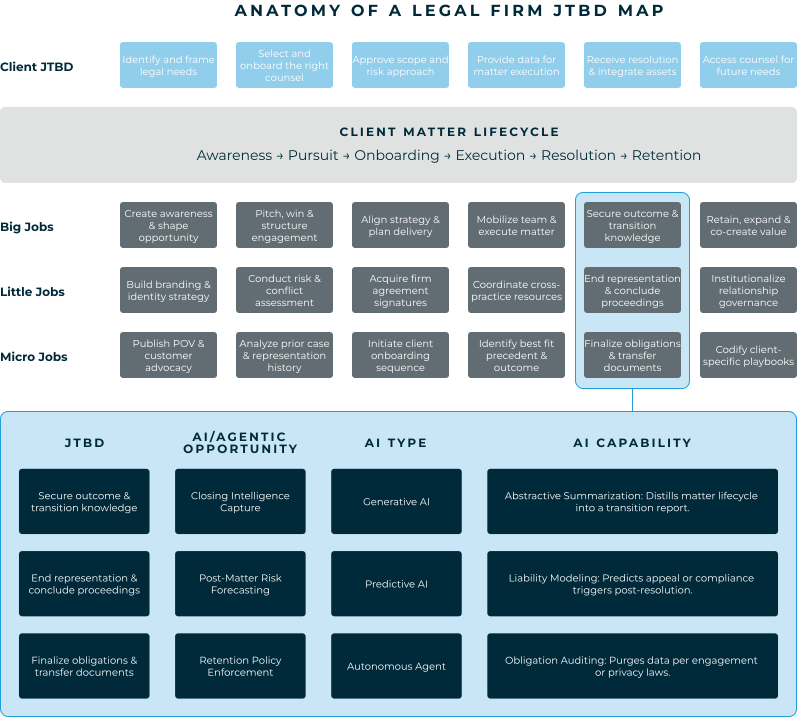
The resulting concepts can be evaluated based on feasibility of the technology, desirability for users, and viability for economic value. This approach can support the iterative process between new innovation discovery and go-to-market delivery, applicable across many teams and grounded in customer value. Figure C.2 shows how jobs in a JTBD map frame the context for focused ideation on potential AI and agentic solutions. These can then be further developed and tested through prototyping ahead of more significant investment.
Building a JTBD map is a structured, co-creative process. A focused, one-day executive workshop brings together executive sponsors and senior cross-functional leaders to map and prioritize jobs to be done across the customer lifecycle, creating a shared view of business and customer outcomes. The resulting end-to-end Job Map is the first foundation of the Intelligent Experience Architecture Framework™. This becomes the critical input for Part 2: identifying the capabilities and strategic technology architecture that bring it to life.
Figure C.2
The jobs in the JTBD map can help set the context for ideating AI solutions or concepts.
These AI opportunities illustrate early concepts and ideas that support the job to be done and can be further prototyped and tested.