Part 3: The Result
Value, Velocity, and Outcomes
The Value Equation:
Aligned Business Outcomes, Maximum Business Impact, and Customer Satisfaction
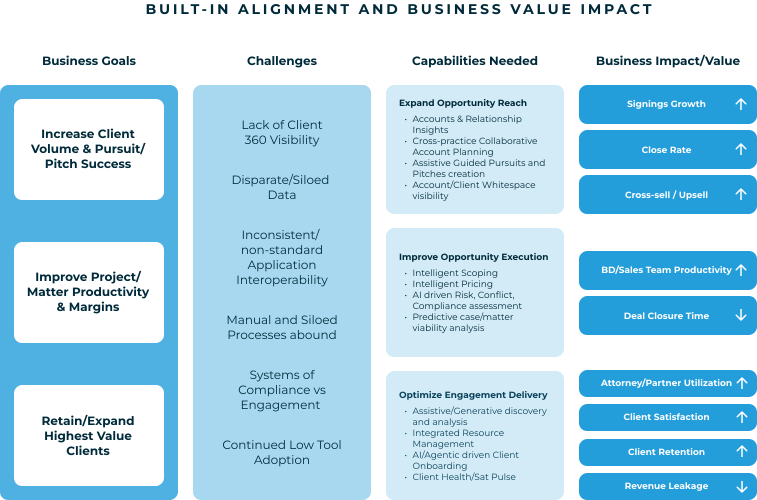
As you complete the business capability maturity assessment along with the current state architecture, many areas of optimization, gaps, underlying issues (e.g. data quality, broken process, bottlenecks), potential business process improvement and technology automation/advancement opportunities are often raised. It is at this point that a business value/impact analysis begins to model and estimate the potential impact (cost, revenue, satisfaction, productivity, etc.) of changes to the status quo. This later becomes the ‘why now’ part of each change story. After the future state architecture and a strategic roadmap is devised, these business value and impact assessments are finalized on exactly what changes will be done and a strong perspective on the business impact is devised. As an example, the addition of a chatbot and AI/Autonomous Agents to the support self-service capabilities can raise NPS/CSAT scores by as much as 37% and decrease cost of support calls by as much as 69%. Below (Figure J) is a simple example of an organization’s summary of business value and impact potential based on specific strategic roadmap changes. This supports the case for change and impact that you’ll need with any executive (especially the CEO and CFO).
Figure J
An example business value model and impact analysis to help communicate a case for transformation.